
UAE Rolls-Royce Suspension Repair: Spot Heat and Dust Wear
In the United Arab Emirates, a Rolls-Royce may face high temperatures, fine dust and frequent changes between smooth roads and uneven surfaces. Those conditions can make owners wonder whether a change in ride height, a new noise or a firmer ride points to suspension damage. But heat and dust alone do not confirm a fault.
A careful Rolls-Royce suspension repair assessment looks at the symptoms, the relevant components and the vehicle’s diagnostic information together. This helps separate a concern that needs monitoring from a fault that calls for repair. For owners in Dubai, Sharjah and elsewhere in the UAE, knowing what an inspection can establish is a sensible first step before approving work.
How UAE heat and dust relate to Rolls-Royce suspension
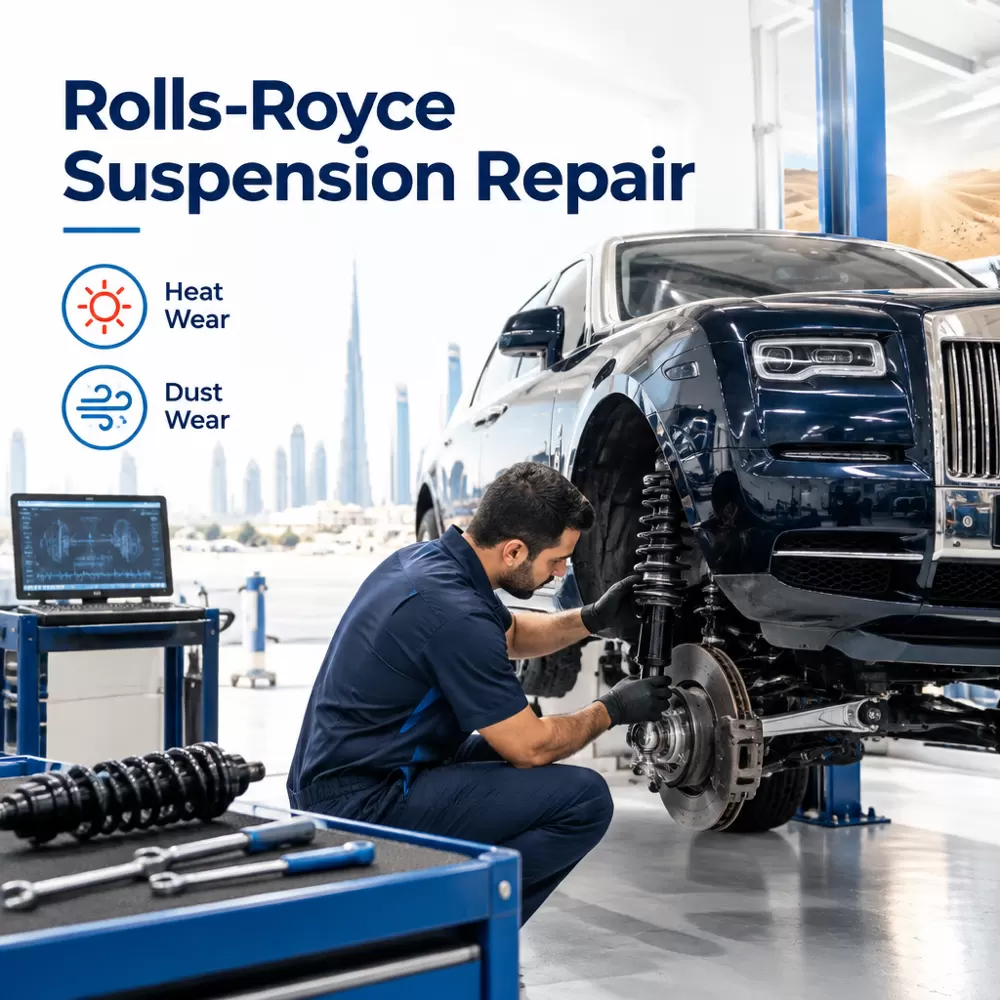
Suspension systems have to work through repeated movement, temperature changes and contact with road debris. In the UAE, prolonged exposure to heat may contribute to ageing in rubber parts over time. Dust and sand can settle around exposed components. Neither condition means a part has failed, and a visible coating of dust is not, by itself, a diagnosis.
Driving conditions also matter. A car used mostly on smooth urban roads may experience different wear from one regularly driven over speed humps, rough access roads or loose surfaces. These are factors a technician can ask about when investigating a change in the way the car sits or travels. They do not replace an inspection of the vehicle itself.
Many Rolls-Royce models use air suspension. Air springs, sometimes called air bags, support the vehicle using compressed air. The system may also include a compressor, air lines, height sensors and electronic controls. Depending on the model and suspension configuration, there may be dampers, control arms, bushes and joints to assess as well. The exact layout varies, so an inspection should follow the vehicle’s specification rather than assume every Rolls-Royce has identical parts.
A slow change in ride height, a warning message or a difference in ride quality can be useful clues. So can a new knocking sound over a bump or uneven tyre wear. Each clue has more than one possible explanation. A technician needs to check the related parts and system data before linking it to heat, dust or a particular failed component.
What an inspection can check, and what symptoms cannot prove
A useful inspection starts with the owner’s description: when the symptom appears, whether it affects one corner or the whole car, and whether it occurs after the vehicle has been parked. The technician can then compare that account with the car’s stance, visible condition and diagnostic information.
Depending on the reported concern and the vehicle, checks may include:
- Ride height: Compare the vehicle’s position at each corner and check whether it changes in a consistent way. A single observation may not explain an intermittent concern.
- Air suspension parts: Inspect accessible air springs, lines and connections for signs that warrant further testing. A visual check alone may not identify a small or intermittent leak.
- Compressor and system data: Review relevant fault information and system operation. A warning or stored code is a clue to investigate, not automatic proof that a specific part needs replacing.
- Mechanical components: Check applicable dampers, bushes, links and joints for wear or damage that could affect movement or create noise.
- Tyres and alignment: Look for uneven wear or other signs that may justify a wheel-alignment check. Alignment readings can help assess wheel angles, but they do not diagnose every suspension fault.
It helps to distinguish a concern from a confirmed fault. A concern is something the driver notices, such as the car appearing lower after standing overnight. A confirmed fault needs supporting evidence from inspection or testing. If the vehicle sits unevenly, that is a reason to investigate, not enough information on its own to identify the failed part.
Similarly, a diagnostic code should be interpreted alongside physical checks and the vehicle’s symptoms. Replacing a component based only on a warning, a sound or an assumption about local weather can lead to unnecessary work. Ask the workshop to explain what was tested, what was found and why the proposed repair addresses that finding.
Heat and dust describe the environment, not the diagnosis. The inspection should connect a reported symptom to evidence from the vehicle.
Arranging Rolls-Royce suspension repair in the UAE
Seek professional assessment if the vehicle repeatedly sits unevenly, displays a suspension warning, develops a persistent new noise or changes noticeably in its ride. If the car appears unstable or the handling has changed significantly, avoid treating it as a routine comfort issue and contact a qualified workshop for advice before continuing to drive. This article is general information, not a diagnosis of an individual vehicle.
Before booking, note when the symptom happens and whether it changes after parking, starting the car or driving over a particular surface. Share any warning message and explain whether the concern affects one side or the whole vehicle. These details can help the technician choose relevant checks without presuming that a specific component has failed.
Owners who want background on why this work can involve specialist parts and diagnostic steps can read rolls royce suspension repairs Use that context to prepare questions, not as a substitute for findings from an inspection of your own car.
When discussing the assessment, ask which checks are planned and whether the workshop will provide a written explanation of the findings. If repair is recommended, a written quote should identify the work and parts being proposed. Ask whether the recommendation is based on a confirmed fault, and whether any further test is needed before a decision is made. Clear answers make it easier to understand the difference between necessary repair and an item that should simply be monitored.
Smart Garage UAE is a Sharjah-based premium technical workshop offering Suspension Care, air suspension repairs and wheel alignment. For a Rolls-Royce, the practical value of a specialist assessment is a methodical check of the car’s own system and condition, with the findings explained before work is approved. Model-specific requirements matter, so the inspection and any parts recommendation should match the vehicle rather than rely on a general assumption about UAE weather.
After the assessment, keep the written findings and note any agreed follow-up. If no fault is confirmed, ask what signs should prompt another visit and when to return if the symptom continues. If a repair is proposed, make sure the quote and explanation align with the evidence. That approach keeps the decision grounded in the vehicle’s condition, whether the concern turns out to involve air suspension, a mechanical component or an alignment check.